Overview
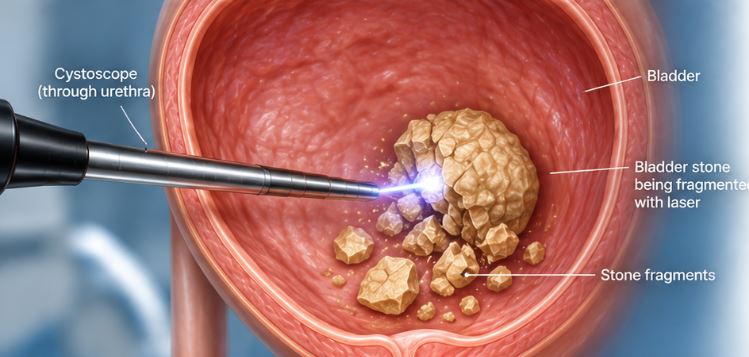
Cystolithotripsy is an endoscopic treatment for bladder stones. A specialized instrument is passed through the urinary passage into the bladder, allowing the stone to be visualized, fragmented and removed. Laser or another suitable energy source may be used depending on the stone and clinical situation.
Common Symptoms
Difficulty urinating, interrupted urine flow, frequent urination, painful urination, blood in urine, lower abdominal discomfort and recurrent urinary infections.
Possible Causes
Bladder outlet obstruction, enlarged prostate, incomplete bladder emptying, recurrent urinary infections, foreign bodies and certain urinary tract conditions.
Diagnosis
Diagnosis may include urine examination, ultrasound, X-ray, CT scan and cystoscopy depending on the size, number and location of bladder stones.
Treatment & Procedures
A cystoscope is introduced through the urethra into the bladder. The bladder stone is identified and fragmented using appropriate energy. The stone fragments are then removed or flushed from the bladder.
Recovery & Follow-up
Most patients recover relatively quickly. Temporary burning during urination, urinary frequency or mild blood in urine may occur after the procedure.
Benefits
Minimally invasive treatment, no large abdominal incision, direct visualization of the stone, effective stone fragmentation and relatively quick recovery.