Overview
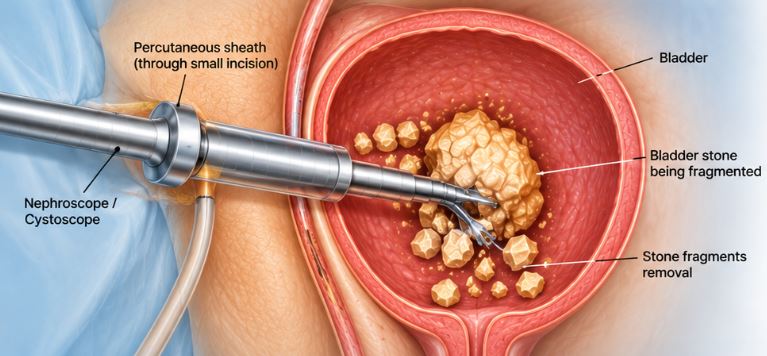
Percutaneous Cystolitholapaxy provides direct access to the urinary bladder through a small percutaneous tract. It can be considered for selected bladder stones, particularly when an alternative route to the bladder is clinically appropriate.
Common Symptoms
Difficulty passing urine, weak or interrupted urine stream, lower abdominal discomfort, blood in urine and recurrent urinary infections.
Possible Causes
Bladder outlet obstruction, incomplete bladder emptying, urinary retention, recurrent infection and other urinary tract conditions.
Diagnosis
Ultrasound, X-ray, CT scan, urine tests and cystoscopic assessment may be used to evaluate bladder stones.
Treatment & Procedures
A small access tract is created into the bladder. Specialized instruments are introduced through this tract to visualize, fragment and remove the bladder stones.
Recovery & Follow-up
Recovery depends on the size and number of stones and the patient overall condition. Temporary catheterization may be required.
Benefits
Minimally invasive approach, small access tract, direct bladder access, effective stone removal and avoidance of a large open incision.