Overview
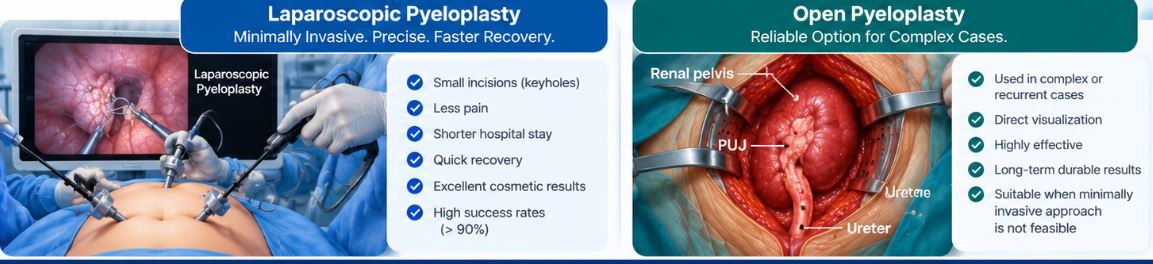
Pyeloplasty treats ureteropelvic junction obstruction, where narrowing prevents normal drainage of urine from the kidney into the ureter. The narrowed segment is reconstructed and the ureter is reconnected to the renal pelvis. The procedure may be performed using laparoscopic or open surgery depending on the clinical situation.
Common Symptoms
Flank pain, recurrent urinary infections, blood in urine, nausea, kidney swelling and sometimes no symptoms.
Possible Causes
Congenital narrowing, abnormal crossing blood vessels, scar tissue, previous surgery and acquired obstruction.
Diagnosis
Ultrasound, CT urography, functional renal imaging and other investigations may be used to assess obstruction and kidney function.
Treatment & Procedures
The narrowed ureteropelvic junction is reconstructed to create a wider drainage pathway. A temporary ureteric stent is commonly placed during healing.
Recovery & Follow-up
Recovery depends on whether laparoscopic or open surgery is performed and on the patient overall health.
Benefits
Restores urinary drainage, relieves obstruction in selected patients, helps preserve kidney function and provides definitive reconstructive treatment.