Overview
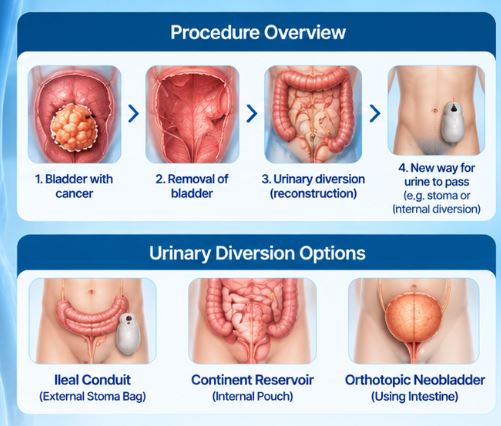
Radical cystectomy involves removal of the urinary bladder and appropriate surrounding tissues and lymph nodes when indicated. Since the bladder is removed, a urinary diversion is created to provide a new route for urine to leave the body.
Common Symptoms
Blood in urine, frequent urination, urinary urgency, painful urination, pelvic discomfort and recurrent urinary symptoms.
Possible Causes
Risk factors for bladder cancer include smoking, occupational chemical exposure, previous bladder cancer, chronic urinary irritation and increasing age.
Diagnosis
Evaluation may include urine tests, cystoscopy, TURBT, CT or MRI and pathological staging.
Treatment & Procedures
The urinary bladder is surgically removed along with appropriate surrounding tissue and pelvic lymph nodes when indicated. A suitable urinary diversion is then created.
Recovery & Follow-up
Recovery requires hospital care and education regarding the urinary diversion. Long-term follow-up monitors cancer status, kidney function and urinary diversion.
Benefits
Removes the bladder containing invasive or high-risk cancer when appropriate, provides comprehensive pathological staging and forms part of curative-intent treatment in selected patients.