Overview
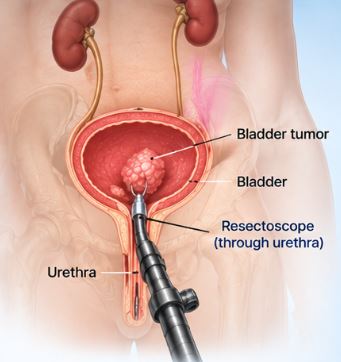
Transurethral Resection of Bladder Tumour is an important procedure in the diagnosis and treatment of bladder tumours. A specialized instrument is introduced through the urethra to visualize the bladder and remove tumour tissue for pathological examination.
Common Symptoms
Blood in urine, frequent urination, urinary urgency, burning during urination, pelvic discomfort and recurrent urinary symptoms.
Possible Causes
Smoking, occupational chemical exposure, previous bladder cancer, chronic urinary irritation and other individual risk factors may contribute to bladder cancer.
Diagnosis
Evaluation may include urine tests, imaging, cystoscopy and pathological examination of tissue obtained during TURBT.
Treatment & Procedures
A resectoscope is passed through the urethra into the bladder. Visible tumour tissue is removed and sent for pathological examination to determine the nature and characteristics of the tumour.
Recovery & Follow-up
Temporary catheterization, urinary frequency, discomfort or blood in urine may occur. Further treatment and follow-up depend on the pathology results.
Benefits
No external abdominal incision, provides tissue for diagnosis, removes visible tumour and helps determine appropriate further treatment.