Overview
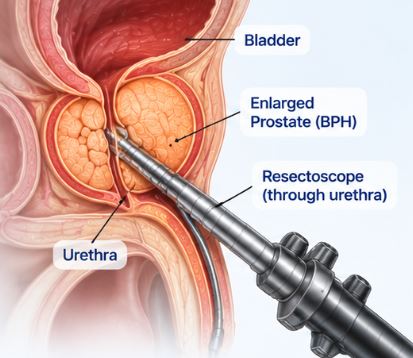
Transurethral Resection of the Prostate is an established surgical treatment for bothersome urinary symptoms caused by benign prostate enlargement. A specialized instrument is passed through the urethra and obstructing prostate tissue is removed.
Common Symptoms
Weak urine stream, difficulty starting urination, frequent urination, urinary urgency, night-time urination, incomplete bladder emptying and urinary retention.
Possible Causes
Benign prostate enlargement can progressively narrow the urinary passage and obstruct normal urine flow.
Diagnosis
Assessment may include medical history, physical examination, urine testing, PSA when appropriate, ultrasound, uroflowmetry and measurement of residual urine.
Treatment & Procedures
A resectoscope is introduced through the urethra into the prostate. Obstructing prostate tissue is removed using an appropriate energy-based technique to improve the urinary channel.
Recovery & Follow-up
A urinary catheter is generally used temporarily. Burning, urinary frequency or blood in urine may occur during the early recovery period.
Benefits
No external incision, improvement in urinary flow, relief of obstruction and an established surgical treatment for selected patients with prostate enlargement.